
By Callene Rapp, Owner of Rare Hare Barn, Co-author of Raising Rabbits for Meat
Rabbits are relative newcomers in the gallery of domestic animals, having only been domesticated and shaped into what we know as breeds in the last few hundred years.
All our modern rabbit breeds descended from the European wild rabbit, Oryctolagus cuniculus, which was first discovered by Phoenician sailors around 1000 BCE on the Iberian Peninsula. From there, they spread across the globe and are now found on nearly every continent as domestic animals.
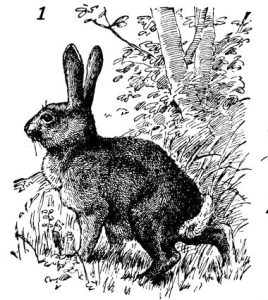
Over 300 rabbit breeds exist worldwide in the present day. French monks are credited with developing some of the first breeds. While no records exist of their process, it’s easy to imagine them taking advantage of random genetic mutations to tweak colors and patterns. The brown agouti color of the original model is rarely found today, and an entire gallery of colors and patterns exists, as well as a wide range of body types and sizes.
Walled rabbit “gardens” soon became the strict province of the French nobility. These gardens weren’t like the gardens we think of today, rather, they were large areas reserved for hunting. Rabbit warrens, which we are more familiar with today, developed from there.
By the late 1890s, dozens of breeds and varieties had been developed, and the Belgian Hare craze had just started to make its way to the United States. Exorbitant prices were being paid for Belgian Hares, and names like Rockefeller and Guggenheim were showing up in the show ring. Rabbits were no longer just for food or fur, but the show fancy had taken root.
In the early 20th century, three uniquely American breeds were developed, which have been recognized on The Livestock Conservancy’s Conservation Priority List.
The American Blue was recognized as an official breed in 1918. Furriers were crazy over the beautiful blue color of the pelts, and a good breeding doe could command a princely sum of $25 at the time. They are also a good meat breed, with their mandolin body shape offering a longer loin. The American White was developed soon after in 1925.
The American Chinchilla followed soon after, in 1919. These excellent meat rabbits were also prized for their fur; the “salt and pepper” look of the fur is from distinct color bands along each hair shaft. Edward Stahl, the gentleman credited with developing the breed, made a million dollars with them during the depression.
The Silver Fox came along in 1925 and was recognized in both black and blue. Their unique pelts feature a “stand up” fur, which remains upright when stroked

Silver Fox doe
backward, rather than snapping back to its original position. They are solid-colored, with white hairs scattered throughout their dense fur.
All three of these breeds were excellent meat rabbits and spread widely throughout the country, providing both food and profit from pelts for the people raising them.
As time went on, American culture shifted from more rural to more urban, and many people left their rural roots for the opportunities available in cities. Rabbit fell out of favor as beef and chicken became more readily available in grocery store meat counters. The development of synthetic fibers meant no one needed fur. Many rabbit breeds became hard to find, and some barely hung on thanks to the efforts of a small handful of dedicated breeders and fanciers. A few, sadly, became extinct. Many of the breeds now shown by the American Rabbit Breeders Association are small, pet-type breeds rather than the larger, meat-type breeds of old.
Fortunately, a pendulum always swings back, and the blooming interest over the last 25 years in more sustainable farming, homesteading and growing your own food has given rabbits a new lease on life.
Rabbits can provide quality protein with less space than just about any other type of livestock. They are one of the most sustainable species of livestock for the homestead. They grow quickly and can be table-ready in 8-12 weeks after birth or ready to be breeding stock in about 6 months. They are easy to skin, and processing is much less messy than plucking chickens. They won’t annoy your neighbors with relentless morning crowing either! The rabbit’s habit of consuming their night fecal pellets and digesting their food twice means their manure is not considered “hot” and can be applied directly to the garden.
Rabbit meat is also high in protein, iron and B vitamins, and low in fat, as they do not deposit fat intramuscularly like beef, for example.
Smaller pet-type breeds may hold sway in the rabbit world today, but there is still a place and a home for meat rabbits in a sustainable farmstead. A huge thanks goes out to the dedicated breeders who kept these breeds and types around for us to be able to enjoy them today!
 Special thanks to the American Rabbit Breeders Association for sponsoring Celebrating 250 outreach and content about rabbits. Visit them at www.arba.net.
If you’re considering sheep ownership, you can learn more about each heritage breed on The Livestock Conservancy’s Conservation Priority List at https://livestockconservancy.org/heritage-breeds/conservation-priority-list/.
If you’re ready to purchase sheep or want to talk with a breeder, you can most likely find what you’re looking for in our online Breeders and Products Directory at https://livestockconservancy.org/heritage-breeds/breeders-directory/
If you would like to support the ongoing work of The Livestock Conservancy, you can become a member or make a donation at https://livestockconservancy.org/
Raising awareness of heritage breeds is the first step to preventing their extinction. You can help by following our Facebook or Instagram page and sharing our posts to spread the word. https://www.facebook.com/livestockconservancy


