Breed Facts
Status:
Critical
Use:
Meat, Some Eggs
Egg Color:
Black with green-blue iridescence
Egg Size:
Medium
Market Weight:
Male – 4.4 lbs.
Female – 4 lbs.
Temperament:
Docile
Characteristics:
Good foragers, adapted well to cold, wet and windy climates
SHETLAND DUCK
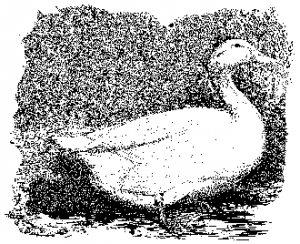
The Shetland duck is a traditional domestic duck of the Shetland Islands that developed as a crofting landrace rather than a standardized exhibition breed. Long-term selection within small mixed-farm systems emphasized hardiness, efficient foraging, broodiness, and dependable egg production under exposed maritime conditions.
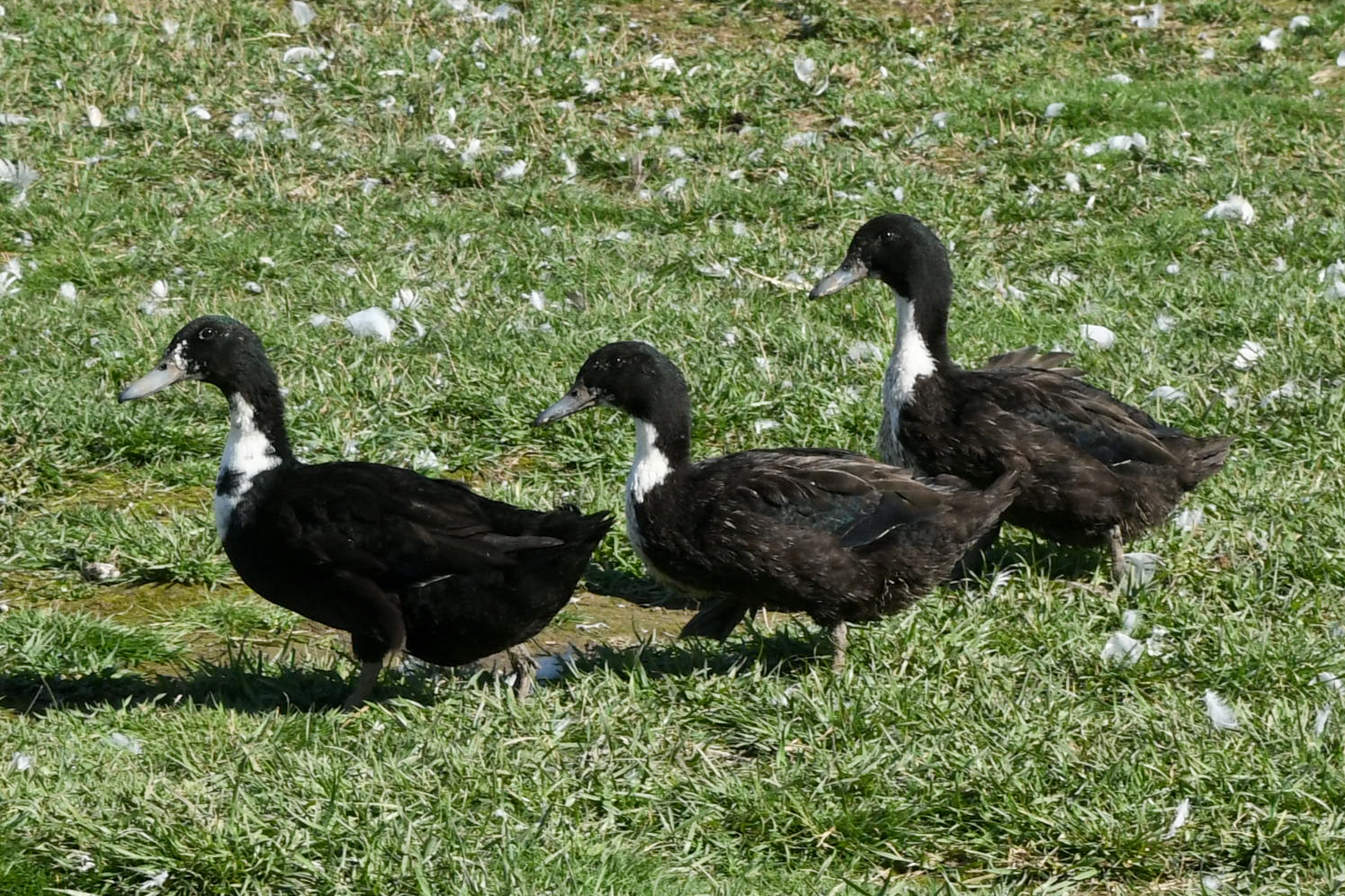
Shetland Ducks
Over centuries, the breed was naturally selected for cold tolerance, foraging efficiency, and the ability to survive in the island’s wet, windy, and nutrient- poor environment. Historically valued by crofters for its high egg production, ease of management, and ability to thrive without supplemental feed, it became a staple of smallholder farms. However, this remains unverified and should be regarded as contextual interpretation rather than documented lineage.
Conservation accounts describe the breed’s historical reliance on marshland and shoreline forage, contributing to low-input croft agriculture. Modern preservation efforts, particularly centered on the island of Trondra, prevented extinction by recovering remnant breeding stock and distributing it among smallholder keepers beyond Shetland.
By the mid-20th century, the breed’s population began to plummet due to the introduction of commercial hybrid ducks and the rise of industrialized farming. By the 1990s, only a handful of Shetland Ducks remained in the United Kingdom—fewer than 150 birds—leading many to believe the breed had effectively vanished.
Despite small-scale recovery efforts, the breed remains at extreme risk. As of 2025, it is estimated that there are fewer than 3,000 purebred Shetland ducks worldwide, with the majority still located in the U.K. The breed’s estimated U.S. population is less than 200 birds.
The Shetland duck’s foraging efficiency, adaptability to cold and wet climates, and compact size make it a valuable candidate for low-impact, sustainable agriculture. The breed represents a living link to agrarian life in the British Isles and embodies centuries of ecological adaptation. Its foraging efficiency, adaptability to cold and wet climates, and compact size make it a valuable candidate for low-impact, sustainable agriculture. Despite modest recovery, the breed remains rare and vulnerable due to small population size, lack of a centralized registry and ongoing risk of misidentification and introgression.
The Shetland duck was added to the Conservation Priority List in 2026 because of its genetic significance to the species.
Did you know:
Commercial food production relies on only a handful of livestock and poultry breeds. The biodiversity represented in the breeds protected by The Livestock Conservancy is needed to safeguard the future of agriculture in a changing world.
Breed Facts
Status:
Critical
Use:
Meat, Some Eggs
Egg Color:
Black with green-blue iridescence
Egg Size:
Medium
Market Weight:
Male – 4.4 lbs.
Female – 4 lbs.
Temperament:
Docile
You may be interested in…