
2026 Board Candidates
(Listed in alphabetical order.)
 Carrie Balkcom
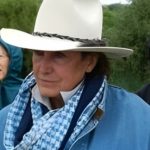
Carrie Balkcom is executive director of the American Grassfed Association. AGA is the National, multispecies entity organized in 2003 to protect and promote Grassfed and pasture-based farmers and ranchers. She was named the E.D. in the first six months of the organization’s formation. AGA is the leader in pasture-based production and the oldest grassfed certification in the United States, and the world. AGA certifies ruminants, pork and dairy.
Carrie grew up on a South Florida cattle ranch in the small town of Immokalee known for its grazing lands, winter vegetable production. Some of her family still lives there today and she and her husband maintain a home there as well as in Colorado and on the East Coast of Florida. She has stayed connected to the agriculture and livestock industry. She has spoken, presented or coordinated for the past 25 years numerous regional and national and international conferences and is well known in agricultural, culinary and sustainable agricultural circles.
A certified executive chef who taught culinary courses at Metropolitan State College of Denver, she was one of the architects of the “Product of the USA” labeling that President Biden included in his first executive order. She is on the front lines of the fight to change Ag policy from a “one size fits all” to more diverse programs that allow for farmers of all production methods to have access to markets.
Dennis Bires
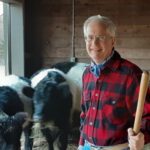 Dennis Bires has had careers as a practicing lawyer and as a law professor, teaching tax and estate planning courses at The University of Tulsa College of Law. He has served as legal and tax counsel for numerous nonprofit organizations, including the Woody Guthrie Center (museum and archive); Bob Dylan Center (museum and archive); Tulsa Community Foundation; Educare Centers (private preschools for children from indigent families); Still She Rises (private defender and social services coordinator for indigent defendants who are mothers); and Center of the Universe Festival (music and art festival).
He was the leader of the Docent Program at The Nature Conservancy’s Tallgrass Prairie Preserve; was founding director and professor at the Summer Institute in Slovakia (for-credit law study in Eastern Europe); served as board chair of the Woody Guthrie Center, and advisory board member of Friends of American Song Archives (overseeing Bob Dylan Center and Woody Guthrie Center). Dennis was a presenter at The Livestock Conservancy’s 2014 Annual Meeting in Austin, on “Tax Treatment of Hobby Farms,” and authored the cover story for the summer 2005 issue of The Livestock Conservancy News: “The Milking Shorthorn in American History.” Dennis and his wife Marian raise Galloway and Milking Shorthorn beef for the home freezer.
 Judy Brummer
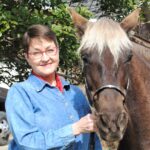
Judy Brummer, M.D., grew up on a family farm in Southern Illinois, where she helped raise cattle, hogs, horses, and crops. Over her 39-year healthcare career, she worked as a nurse, owned and managed a family health clinic, and became an emergency medicine physician. Now retired, Judy and her husband, Michael, raise cattle and Rocky Mountain Horses in Central Illinois. They became lifetime members of the Rocky Mountain Horse Association (RMHA) in 2002 and have travelled extensively to promote this heritage breed. Judy’s involvement with RMHA includes serving on various committees and spending 10 years on their Board, 6 as President, gaining valuable insights into breed organization management, conservation breeding, strategic planning, and the coordination of volunteer efforts.
Currently, she serves as the Secretary of the Rocky Mountain Horse Foundation (a 501(c)(3) organization and is a member of the RMHA’s Charles Kilburn Society. After learning about The Livestock Conservancy, Judy became an advocate for all heritage breeds. She collaborated with the staff on the “Cultivating Leadership for Breed Organizations” webinar series and joined the Board in 2022. Appointed as our interim executive director from 2023 to early 2025, she now co-chairs the “Celebrating 250” initiative. Judy is inspired by the dedication of heritage breed owners and supporters and feels honored to work with the staff and to be considered for board membership again.
 Cynthia Capers
Cynthia Capers, a retired trauma nurse, pharmaceutical biotech clinical researcher, and sorority member of Sigma Gamma Rho, Inc., is the founder/owner of Heniscity Farm in Pegram, TN. Heniscity Farm was created to extend across the ancestral journey to Mother Earth unifying cultural gaps to the land and reducing hunger along the way. National Poultry Improvement Program (NPIP) certified, Heniscity Farm specializes in heritage breeds and domestic free-range poultry. From the big city of Chicago to now a small-town feathered fowl aficionado, she has over 20 years of experience with poultry. Pastured meat, fresh eggs, canned fruits/vegetables, live birds, and herbal balms are sold via eCommerce, community grocery stores and on the farm.
A graduate of TSU’s New Farmers Academy, she is also a member of the American Pastured Poultry Producers Association (APPPA), The Livestock Conservancy, a licensed egg grader, and an industrial hemp grower. As well as developing a small flock poultry curriculum in partnership with TSU, Heniscity Farm was recently honored to be chosen the 1st Livestock Farm certified in TN under the Cumberland River Compact. Cynthia is currently teaming with a United Nations based group to ensure equality in agriculture across the globe. Although new to general farm methods, she is considered the local poultry expert in the Nashville TN area and believes heritage breeds must be on the agricultural radar as entry-level livestock.
 Therese Coucher
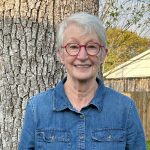
Therese Coucher first read about The Livestock Conservancy, then known as American Rare Breeds Association, in a magazine article about a woman who had imported several Poitou donkeys from France. As a lifelong animal lover, growing up in the western U.S., she was fascinated. The article was about her and her donkeys but mentioned the ARBA and its goal of preserving rare breeds of livestock. Therese joined The Livestock Conservancy as a member in the late 1980s. For many years, Therese bred Komondor dogs and maintained their registry. She also raised Angora rabbits and kept and showed Morgan horses. She now keeps chickens to provide fresh eggs and lives with two Berger Picards, an ancient breed of sheepdog.
Therese is also a tapestry weaver, woodworker, artist, Master Gardener, and Master Naturalist. From 2017 to 2022 she worked as a volunteer with The Livestock Conservancy, working to enhance and reorganize the livestock census. She reached out to more than 100 livestock breed associations and registries each year to gather data used to determine changes to the Conservation Priority List. Therese spent several years on this project, and in the end the census now reflects many years’ worth of worldwide data for hundreds of breeds.
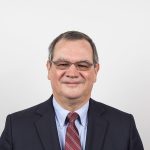 David Day
David Day and his wife, Brenda, reside on a small farm outside Noblesville, Indiana. They have three children, seven grandchildren, and an active sheep flock. The flock includes purebred Lincoln Longwool sheep, a breed recognized as threatened by The Livestock Conservancy.
David is a senior partner in the central Indiana law firm of Church Church Hittle and Antrim. He has been in private practice for almost 49 years, including over 10 years as managing partner of the firm. Currently, David is transitioning to a less active law practice. Over the years, David has provided both legal advice and board service to a number of nonprofit and civic organizations. These have included leadership roles on an elected school board, various livestock organizations including president, treasurer, and board member of the Indiana Sheep Association, board member of two national sheep breed organizations, and a board member of The Livestock Conservancy and Conner Prairie history museum.
David is a native of Indiana and holds a bachelor’s degree from Ball State University and a law degree from Harvard Law School.
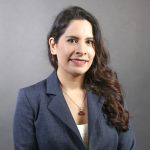 Zaira Estrada-Reyes
Zaira Estrada-Reyes is a Research Associate Professor of Small Ruminant Science with emphasis on health, immunology and genomics at Prairie View A&M University in Texas. She earned her Ph.D. in Animal Molecular and Cellular Biology from the University of Florida and completed her postdoctoral training in animal functional genomics at the University of California, Davis, and
Fort Valley State University.
Her research is driven by a strong passion for heritage livestock, which has been the foundation of her scientific work. Since 2014, she has conducted research on the genetics and molecular mechanisms underlying parasite resistance, heat tolerance and other complex traits in several heritage sheep and goat breeds, including St. Croix, Florida Cracker, and Navajo-Churro sheep, as well as Spanish goats. She also has research experience spanning beef cattle, dairy cattle, and poultry systems.
Her overarching goal is to highlight the exceptional production potential and adaptive traits that heritage breeds offer to livestock producers. She firmly believes that heritage livestock play a critical role in ensuring food security and supporting the long-term operation of farming systems due to their genetic diversity, hardiness, and unique adaptation to local habitats.
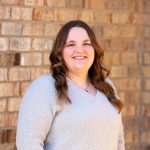 Stephanie Niswonger
Stephanie Niswonger serves as the Director of Agriculture Initiatives at Conner Prairie Museum in Indiana, where she has been involved since 2005. She oversees the site’s working farm, heritage breed livestock herds, daily agricultural experiences and outreach programs. Passionate about agricultural education, Stephanie is dedicated to making agriculture relevant and accessible to everyone through engaging agriculture experiences. She played a key role in transforming Conner Prairie into a working farm dedicated to rare breed conservation and is honored to introduce the public to the importance of heritage breeds. She is especially proud of the Youth Agriculture Captain program, which mentors and trains youth volunteers in leadership using the site’s Arapawa goats, Ossabaw hogs, English Longhorn and Randall cattle, American rabbits and Tunis sheep.
Stephanie earned a bachelor’s degree in Historic Preservation with a Site Administration concentration from Southeast Missouri State University, graduating summa cum laude. She serves on The Livestock Conservancy’s Celebrate 250 Volunteer Task Force and the Board of Directors for the Arapawa Goat Breeders Association USA. She has presented at multiple conferences and has written articles for various publications. Outside of work, she enjoys volunteering at a zoo and spending time outdoors, hiking, kayaking, biking and gardening.
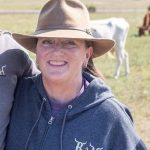 Callene Rapp
After a landmark 30-year career at the Sedgwick County Zoo, Callene Rapp transitioned into a new chapter in 2026, though her commitment to heritage breeds remains as active as ever.
Her experience in the world of rare breeds is both institutional and entrepreneurial. Alongside her husband, Eric, she owned and operated Rare Hare Barn, which grew to become the largest heritage meat rabbit business in the country, at one point supplying over 50 premier restaurants. This background in production and market-building led Callene to author two definitive books, Raising Rabbits for Meat and Homestead Cows, as well as numerous articles for Grit magazine.
In her “retirement,” Callene has stepped deeper into leadership and research roles. She currently serves as the Registrar for the Arapawa Goat Breeders Association (AGBA) and is a founding member of the newly formed American Poitou Donkey Breeders Association. Having previously served on the board of The Livestock Conservancy, she continues to advocate for the genetic security of rare livestock through her own farm’s diverse population.
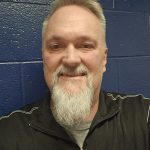 Gregg Rentfrow
Gregg Rentfrow, Ph.D. is an Extension Professor of Meat Science at the University of Kentucky. Dr. Rentfrow has 37 years’ experience in the meats industry after beginning his career as a retail meat cutter in 1989. He earned his B.S. and M.S. in Animal Science and Meat Science, respectively, at the University of Illinois and his Ph.D. in Meat Science and Muscle Biology at the University of Missouri.
He joined the faculty in the Department of Animal and Food Sciences at the University of Kentucky in 2006. Dr. Rentfrow’s marque extension programs are the UK Meat Cutting School, the 4-H Country Ham Project, and the Food Systems Innovation Center.
He lives in Madison County, Kentucky, with his wife and daughter. His hobbies include powerlifting, mixed martial arts, bowling and playing the guitar.
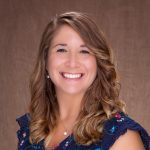 Stephanie Wetter
Stephanie Wetter is Director of Animal Welfare for the National Pork Board, where she leads science-based efforts to advance animal care, producer education, and continuous improvement across the U.S. pork industry. She holds bachelor’s degrees in Psychology and Animal Science from the University of Missouri, a master’s degree in Animal Science from Purdue University, and an Executive MBA from Iowa State University. Her professional work centers on practical, transparent approaches that support animal well-being while ensuring producer viability and trust across the food system.
Stephanie and her husband have operated Rainbow Raccoon Ranch in Iowa for the past six years, raising Scottish Highland cattle (graduated from the Conservation Priority List) and, more recently, Poitou donkeys. They have also raised heritage breed Cayuga ducks and miniature donkeys. A member of The Livestock Conservancy since approximately 2020, Stephanie strongly aligns with the Conservancy’s mission to protect genetic diversity and promote conservation through responsible use.
Through on-farm events and community outreach, Rainbow Raccoon Ranch uses heritage breed animals as living ambassadors to connect the public with agriculture, rural communities, and food production. Stephanie brings to the Conservancy a combination of scientific training, hands-on livestock stewardship, and a deep commitment to education and conservation-minded agriculture.
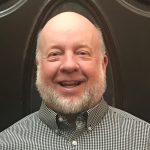 Martson White
Marston White grew up in the American Southwest with exposure to western heritage ranching practices. Following graduation from Arizona State University, he worked during the late 1980s on a cattle station in Northern Queensland, Australia. Moving to Texas in 1991, he worked on a number of ranches which belonged to a family member.
With his wife, he founded Honey’s Acres Farm in 2012, and he first reached out to the then-American Livestock Breed Conservancy (now The Livestock Conservancy) about sources of American Milking Devon cattle and beef for a multi-session Slow Foods USA judging criteria on blind taste testing. In 2014, I presented a poster at the ALBC annual meeting in Austin, Texas, featuring AMD cattle, a Suffolk Punch mare and Orpington chickens.
Most recently, he was featured on RFD-TV’s “Texas Agriculture Matters” on American Milking Devon cattle. He says building food sovereignty and security using regenerative, sustainable practices with landrace and heritage breeds is a passion.