CHICKS IN THE CLASSROOM
Since 2013, The Livestock Conservancy has partnered with Extension Associates and small farms to provide rare heritage breed hatching eggs to elementary schools through the Chicks in the Classroom hatching project. This partnership provides youth an opportunity to learn about life cycles, heritage breeds, and genetic conservation. Teachers use Extension’s 4-H curriculum to guide students through the incubation process and embryonic life cycle. Additional materials provided by The Livestock Conservancy help students learn about the role of heritage breeds in biodiversity and on today’s farms, backyards, and ranches.
Programs can get started by teachers reaching out to their local Extension office to find a 4-H leader that can help set up a program using the curriculum the organization has developed for the program.
Using the Livestock Conservancy’s Online Breeders and Products Directory, Extension agents and teachers can find a heritage breed poultry breeder close to them. Typically, eggs are sourced from the farmer and the hatched chicks are then returned to them. To ensure good biosecurity, individual incubators will only have eggs from one farm so that cross contamination between eggs/chicks from multiple farms will not be an issue.
Over a four-week period, participants learn about how to take care of chicks, and fun facts for when chicks become chickens.
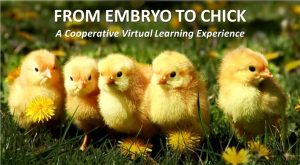
Classrooms and home schoolers can use an additional virtual learning experience to augment their lesson plans. These videos were developed by The Livestock Conservancy and Chatham County 4-H, a program of the North Carolina Cooperative Extension Service.
- Day 1: Importance of Good Handwashing
- Day 2: Warming Up the Eggs
- Day 3: Building an Eggs-Ray Viewer
- Day 4: Playing Peek-a-Boo with Embryos
- Day 5: Eggsploring the Egg
- Day 6: Pick a Chick
- Day 7: Building a Home “Tweet” Home
- Day 8: Chicken Time on Jeannette’s Farm
- Day 9: Eggsploring Careers
- Day 10: Caring and Handling
- Day 11: Counting the Chicks
- Day 12: Part 1 – Chick Check-In with Jeannette
- Day 13: Part 2 – Chick Check-In with Victoria
The Classroom Heritage Chick Hatching Project makes measurable impact on students and learning. A survey in one school system found that, at the completion of the program, 94% of students demonstrated a greater interest in science. These children also expressed an interest in pursuing a science or agriculture-related career in the future. More than 80% of students also showed marked improvements in science grades and assessments. Teachers also report classrooms have fewer student absences when eggs are being incubated and chicks are living in the classroom.
At the end of the classroom experience, chicks return to the farms that provided the eggs. Closing the life-cycle loop allows the chicks to help expand their farmers’ flocks. Sometimes, classroom-hatched chicks are placed with new farmers to start new flocks! In these ways the project serves as a citizen science initiative contributing to conservation and biodiversity in communities across America.
For questions about this program, finding heritage breed eggs for a classroom, or The Livestock Conservancy, please contact us at info@livestockconservancy.org . While the curriculum is designed for chickens, heritage breed duck, goose, and turkey eggs have also been successfully hatched in classroom incubators.
Additional Resources
Heritage Breed Chicken Coloring Book (.pdf)
(purchase hard copy here)